One of the first questions we hear from new and visiting divers in Dubai and Qatar is a simple one: when should I actually get in the water? The good news is that the Arabian Gulf is one of the few places on earth where you can dive comfortably in a thin wetsuit for much of the year. The more useful answer, though, is that the season you choose changes the water temperature, the visibility, what you'll see below the surface, and even what you'll want to wear.
This guide breaks it down month by month, explains why the cooler half of the year is generally the sweet spot, and covers the honest trade-offs of diving through a Gulf summer.
How the Arabian Gulf behaves through the year
The Gulf is a shallow, semi-enclosed sea, which means its temperature swings more dramatically than the open ocean. It heats up fast in summer and cools noticeably in winter, and both extremes matter to divers.
In Dubai and along the UAE coast, sea surface temperatures average roughly 22°C at their coldest in January and February and climb to about 33°C in July, August and September. Winter months sit in a comfortable 20–23°C band, while peak summer routinely reaches the low 30s. Qatar follows a similar pattern, with coastal waters ranging from around 20–23°C in the depths of winter to the low-to-mid 30s in late summer.
To put that in perspective: many temperate dive destinations rarely climb above the high teens. Here, even "cold" water is what divers elsewhere would call warm. The practical upshot is a genuinely year-round season, but with a clear best window.
Month-by-month at a glance
- December to February (winter): Coolest water, roughly 20–23°C. Calmer, clearer conditions on many days.
- March to May (spring): Water warming from the mid-20s upward. Often an excellent, comfortable window before the heat peaks.
- June to September (summer): Warmest water, around 30–34°C, with very hot air temperatures topside.
- October to November (autumn): Water cooling back down from the low 30s. Pleasant diving as the summer heat eases.
Why October to May is the prime window
Ask experienced Gulf divers and dive operators in both countries, and the same answer tends to come back: the stretch from around October through May is the standout season, with the months either side of winter often singled out as the most reliable. Qatar in particular is widely described as offering excellent conditions from roughly October to May.
There are three reasons this window works so well.
Comfortable water and air. Summer sea temperatures above 30°C sound appealing, but combined with 40°C-plus air, long surface intervals on a boat can be genuinely draining. Cooler-season water in the low-to-mid 20s is refreshing rather than fatiguing, and the milder air makes the whole day more enjoyable.
Generally better visibility. The cooler months tend to bring calmer, clearer water on many sites. That said, it's worth being honest here: visibility in the Gulf is not fixed by season alone. Wind direction, recent weather, currents, plankton blooms and how exposed a site is all shape what you actually get on the day. Winter simply stacks the odds in your favour — it doesn't guarantee a perfect day.
More settled sea conditions. Fewer strong summer winds generally mean calmer surface conditions and easier boat dives, which is especially reassuring for newer divers.
If you're planning a course or a run of dives around a trip, this is the window to aim for. You can see our full range of programmes on the courses page.
The summer trade-off
Summer diving isn't off the table — plenty happens in the Gulf between June and September — but it comes with caveats worth understanding.
The water becomes bath-warm, which some divers love and others find sluggish. Air temperatures are extreme, so hydration, sun protection and shorter surface intervals matter more. And warmer, more stratified water can bring more plankton and reduced visibility on some days. The flip side is a big one, though: summer is whale shark season in the region (more on that below).
For many residents, the smart move is to dive year-round but treat summer as the time for early-morning starts and shorter days on the water.
How the season changes what you'll see
The Gulf's marine life is more varied than its reputation suggests, and the calendar genuinely shifts what shows up.
Cooler months (roughly October–May)
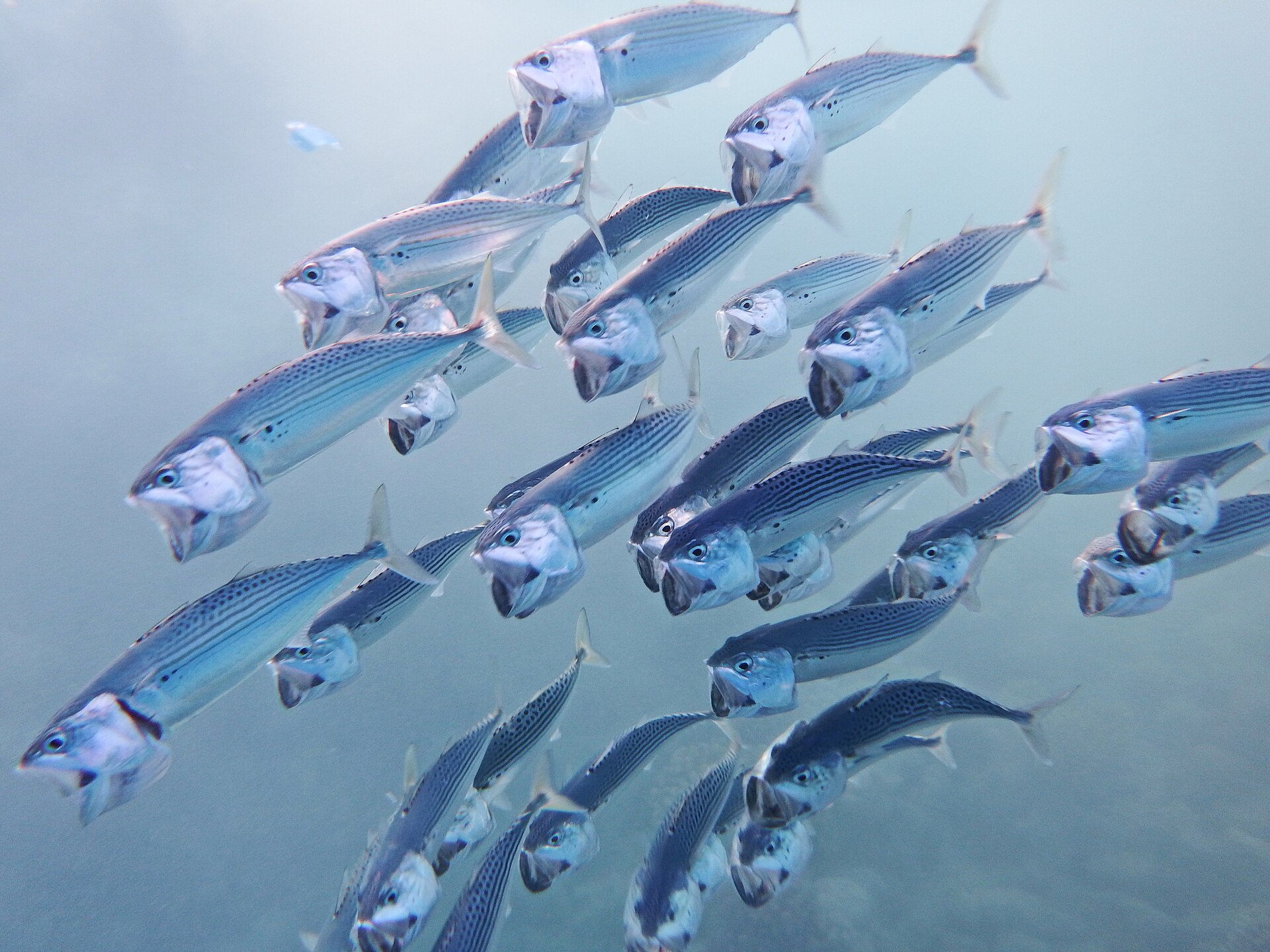
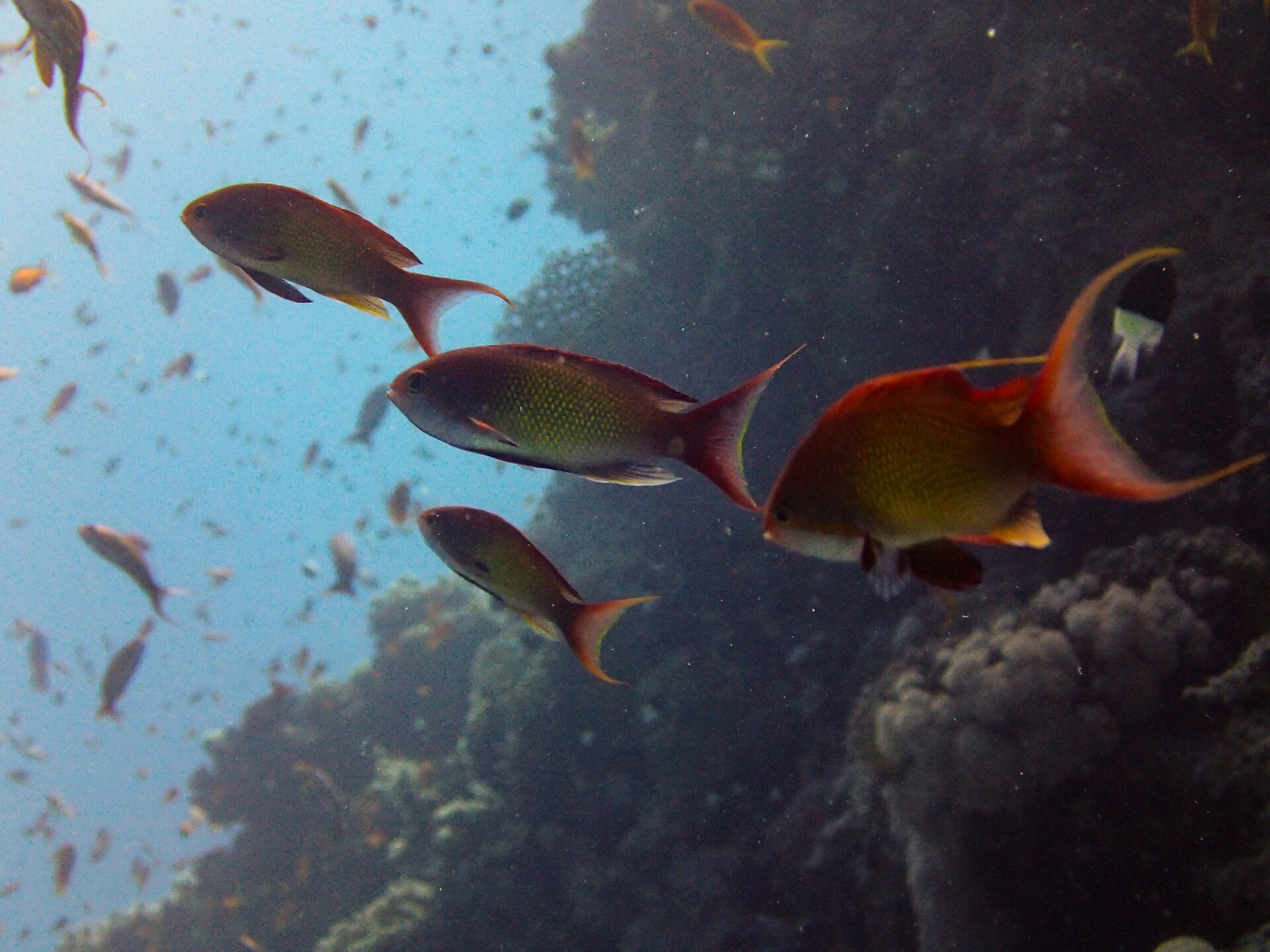
This is prime time for the resident reef community. Expect angelfish, sergeant majors, grouper, batfish, barracuda and the occasional cruising nurse shark. The UAE's waters are also home to the world's second-largest dugong population — an estimated 3,000 of these gentle seagrass-grazers live mostly in the protected waters of Abu Dhabi's central and western regions, second only to Australia. Green and hawksbill turtles and pods of dolphins round out the cast. Our marine life guide goes deeper on what lives here and where.
Summer (roughly April–September)
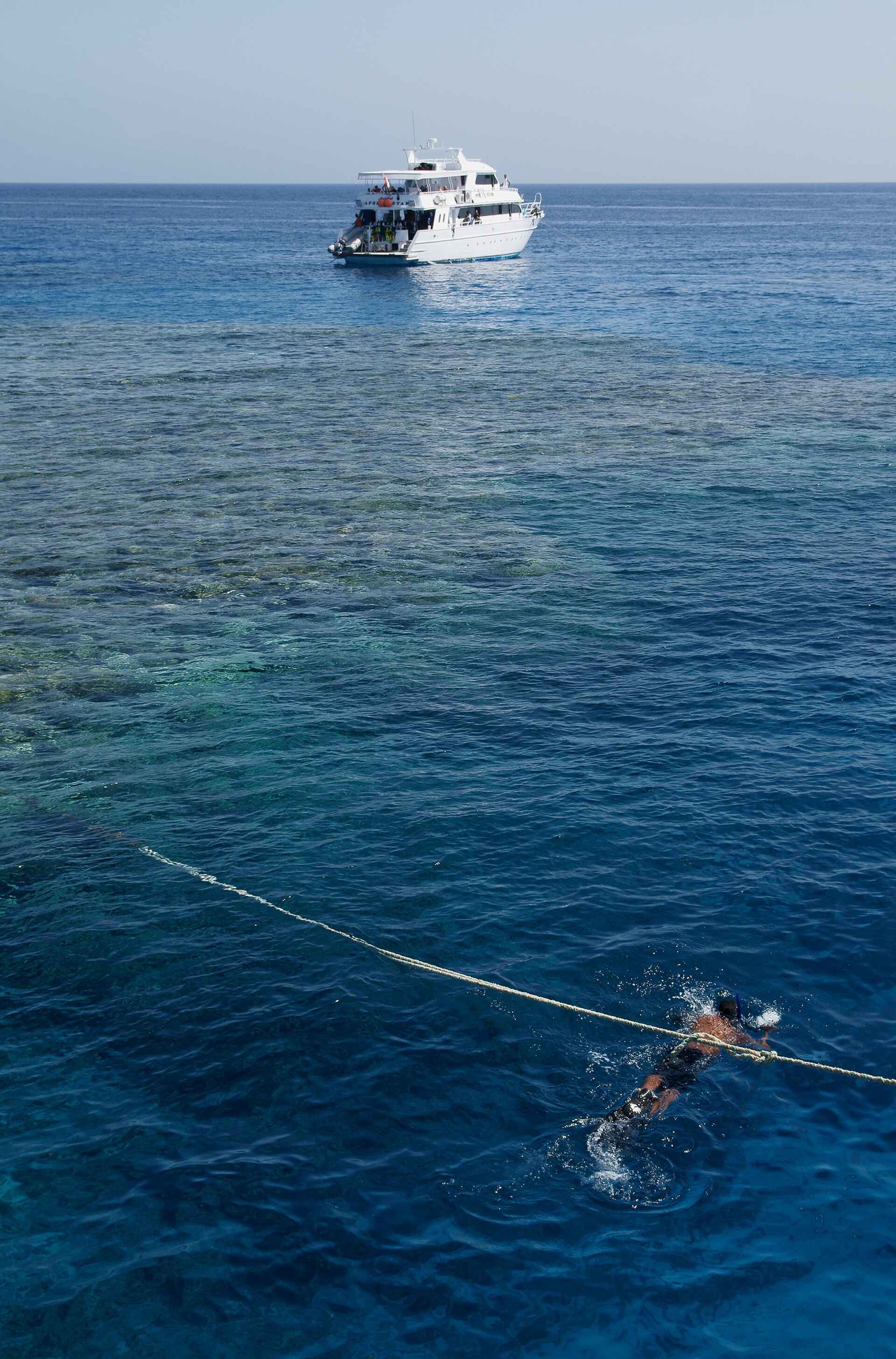
The headline is the whale shark aggregation off Qatar. Around the Al Shaheen field, some 90 km offshore, one of the largest gatherings of whale sharks on the planet forms between roughly April and September, peaking from May to August. The sharks come to feed on mackerel tuna eggs at the surface. It's a remarkable, strictly protected event: licensed operators run snorkelling and observation trips only — no scuba, no touching, no feeding — to keep these gentle giants and their habitat safe.
What to wear, season by season
Water pulls heat from your body far faster than air, so even warm-feeling water can chill you over a long dive or repeat dives. Thermal comfort is personal, but here's a sensible starting point:
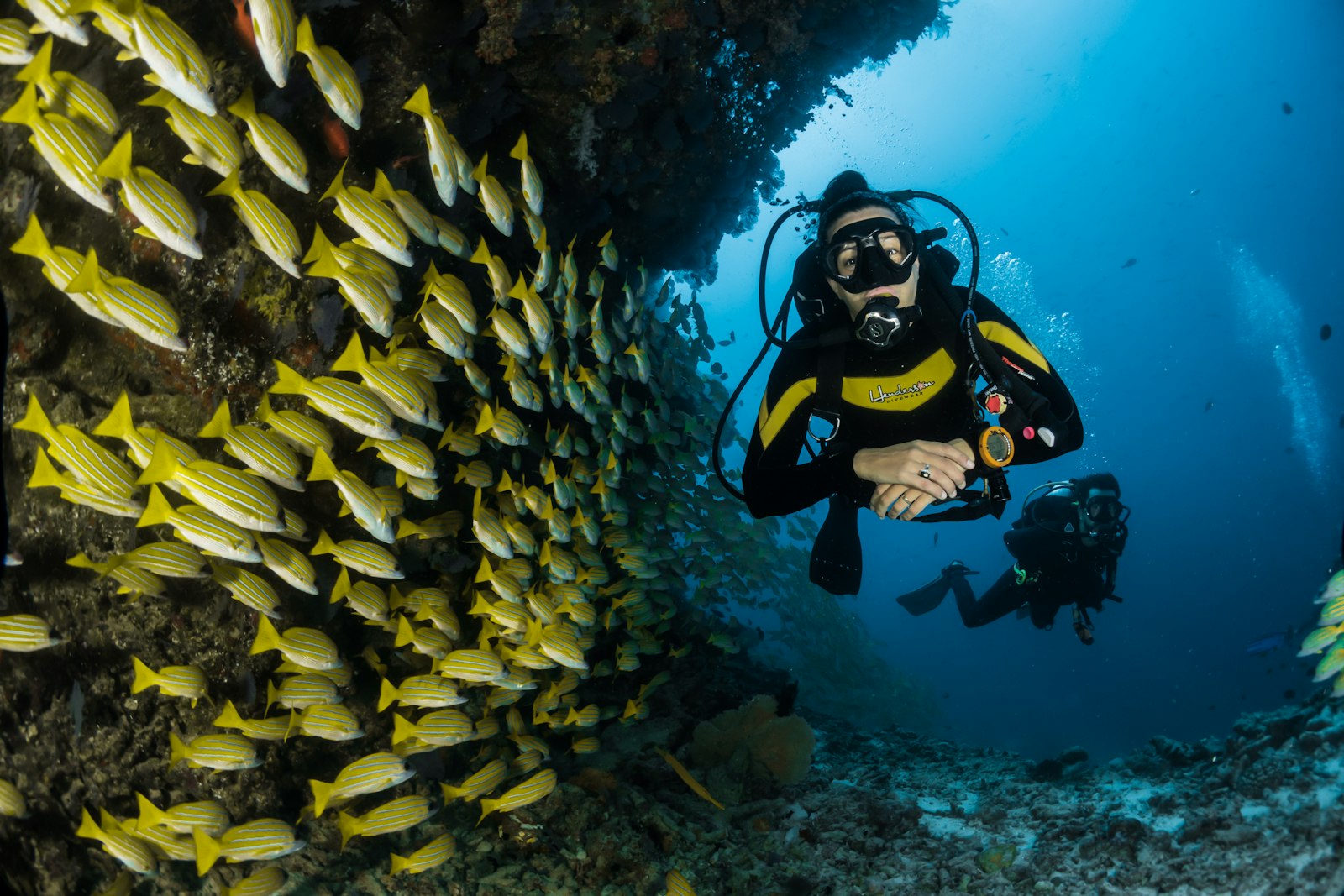
- Winter (20–23°C): A 5mm full wetsuit suits most divers, and those who feel the cold may add a hood or vest, especially on repetitive dives.
- Spring and autumn (24–27°C): A 3mm full suit is the versatile all-rounder — flexible yet warm enough.
- Peak summer (30–34°C): A 3mm shorty or a rash guard is plenty for many; some divers go thinner still.
Remember that neoprene loses insulating efficiency with depth, so if you run cold, add a little more protection. Our gear guide covers wetsuits, exposure protection and what's worth owning versus renting.
Planning your dives
For most divers in Dubai and Qatar, the recipe is straightforward: aim for October to May for the most comfortable water, the best odds on visibility and the fullest reef life; consider summer if a whale shark encounter is on your bucket list, accepting warmer, sometimes murkier water and hot days on the boat. Whichever season you pick, check the forecast the day before — wind and recent weather tell you far more about visibility than the calendar does.
If you're new to diving, the cooler months are a forgiving, enjoyable time to start. To match a course or guided dives to the right season for your visit, get in touch with the team — we can talk through timing at both our Dubai and Qatar bases.