Mention scuba diving in the Middle East and most people picture the Red Sea, or perhaps the wrecks off Dubai. Qatar rarely makes the shortlist. That is a shame, because the waters off Doha and Lusail offer something genuinely distinctive: a calm, shallow, sandy-bottomed corner of the Arabian Gulf where much of the best diving has been deliberately built by human hands. If you live in Qatar, or you are visiting and curious about what lies beneath the Gulf, here is an honest look at what to expect.
Why Qatar's diving is different
Qatar sits on the western side of the Arabian Gulf, a shallow, warm, semi-enclosed sea. There are no towering coral walls or dramatic drop-offs here. Instead you get gentle sandy plains, scattered natural rocky outcrops, and, crucially, a network of artificial reefs and small wrecks placed offshore over the past few decades.
This matters for two reasons. First, the Gulf's natural reef habitat is limited, so man-made structures do a lot of the heavy lifting in concentrating marine life. Second, those structures tend to sit in shallow, sheltered water with a forgiving sandy bottom, which makes them ideal for training and for divers building confidence.
One thing worth flagging early: the Arabian Gulf is one of the most saline seas on the planet. That extra salinity makes you more buoyant, so you will usually need a little more weight than you might expect to stay comfortably neutral. Your instructor or guide will sort this out on the day, but it is a genuine local quirk rather than a mistake in your training.
The artificial-reef story: wrecks and man-made sites
Most of Qatar's better-known dive sites cluster offshore, with a concentration around the Sealine area south of Doha. A few you are likely to hear about:
- The Barge — a former coast-guard barge that sank in the late 1990s and now rests at around 21 metres. It is a popular introduction to wreck diving because it lets divers get a feel for structure without the commitment of a technical site.
- New Club Reef — a man-made reef assembled from concrete reef-balls, blocks, pipes and assorted structures, reaching around 19 metres, though most of the objects sit between roughly 12 and 16 metres. It has had years to mature and is a regular for guided dives and training.
- GMC Reef — one of the more characterful sites, built around four sunken vehicles sitting between roughly 6 and 12 metres, a short swim from the beach. Over the years it has drawn in groupers, batfish, barracuda, bream and more.
You may also hear about deeper sites such as the Pericles, a wreck whose main structure sits around 28 metres, which puts it firmly in the advanced-diver bracket. Note that access to some sites changes over time due to security and marine regulations, so the current, permitted list is always worth confirming with a local operator before you plan a trip.
Because so many of these sites are shallow and sheltered, they double as excellent classrooms. Sandy seabeds are forgiving for buoyancy practice, and the artificial structures give trainees something to explore without the risk of damaging fragile living coral.
Best time to dive: October to May
Qatar has two very different diving seasons.
From roughly October to May, conditions are at their best. Water temperatures sit comfortably, ranging from around 20°C in the depths of winter up to the mid-to-high twenties in spring, and visibility is at its clearest, often reaching up to around 15 metres. Topside weather is pleasant rather than punishing. Spring in particular is a sweet spot: mild air temperatures combined with water that is beginning to warm.
Summer (roughly June to September) is a different proposition. Air temperatures can soar past 40°C, and while the sea itself becomes bath-warm at around 30-34°C, the water often clouds with plankton blooms, and stinging jellyfish become more common. It is still divable, but it is rarely anyone's favourite window, and it is not the gentlest introduction for a first-timer.
For beginners especially, planning around the October-to-May window gives you the calmest, clearest and most enjoyable first impression of the Gulf.
What marine life you can realistically expect
Set your expectations for a subtle, small-scale kind of underwater life rather than a technicolour coral spectacle. The rewards here come from paying attention.
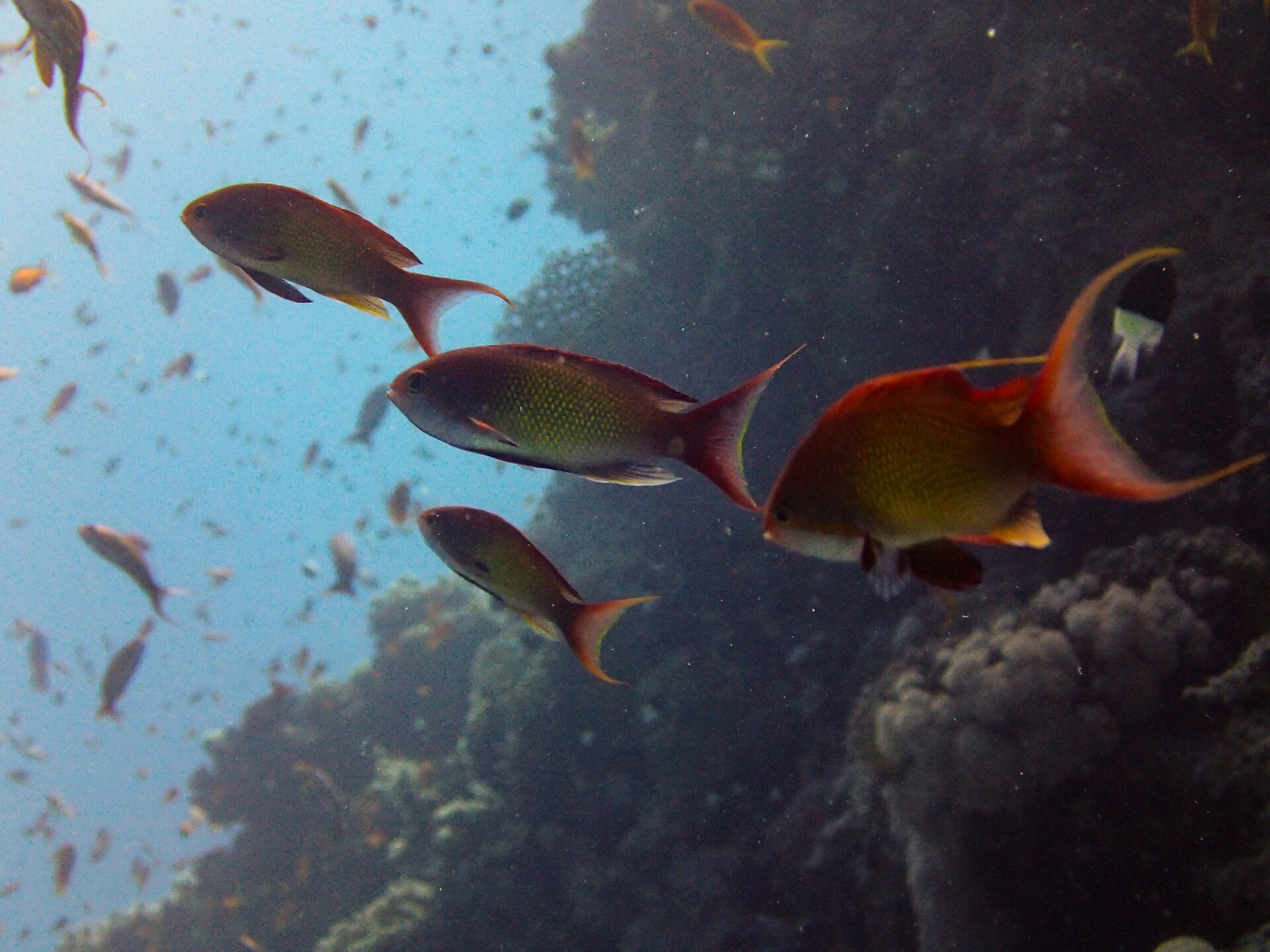
On the sandy bottoms and around the reefs you can reasonably hope to see stingrays resting on the sand before lifting off in that slow, elegant glide, and occasionally the more dramatic eagle ray. Groupers hold their position with real confidence around structure, jacks and barracuda pass through, and batfish and bream drift around the wrecks. Look closer and the sand and structure reveal the small stuff: nudibranchs, blennies, gobies, pipefish, shrimp and crabs, the treasure-hunt species that reward a patient, slow dive.
Qatar's waters are also home to hawksbill and green turtles, and, less commonly encountered by recreational divers, dugongs and reef sharks. On the wrecks you will often find lionfish and octopus tucked into the structure.
A word on the region's most famous marine visitor. Between roughly April and September, Qatar hosts one of the world's largest gatherings of whale sharks at the Al Shaheen field, around 90 kilometres offshore. It is a genuinely world-class natural phenomenon, but it is important to be realistic: that area is a high-security offshore oil zone, largely closed to the public and prioritised for research and conservation. It is not somewhere you can simply book a recreational dive, so treat those viral whale-shark photos as context, not as a Qatar dive-trip promise.
Training in Qatar: a genuinely good place to start
The combination of shallow, calm, sandy-bottomed sites makes Qatar a very sensible place to learn. If you have never breathed underwater before, a PADI Discover Scuba Diving experience is the natural first step. It is an introductory try-dive rather than a certification, open to anyone aged 10 and over, and on the open-water portion you will not go deeper than 12 metres, or deeper than you feel comfortable with.
If you decide to go further, the PADI Open Water Diver course is the entry-level certification. It typically runs over three to four days and includes a basic watermanship check: you need to be able to swim 200 metres, or 300 metres in mask, fins and snorkel, without stopping, and to float or tread water for 10 minutes. The standard certification is open from age 15; divers aged 10 to 14 earn a Junior Open Water Diver qualification with shallower depth limits. Newly certified Open Water Divers are limited to about 18 metres, with 40 metres being the outer limit of recreational diving, reached only with further training. From there, Advanced, Rescue, Divemaster and a range of specialties open up progressively. You can see the full ladder on our courses page.
Mermaid Diving Center's Qatar team is based at Rixos Qetaifan Island North in Lusail, which puts you within easy reach of the country's dive sites and training areas. If you are weighing up whether the season, your fitness or your experience level is right for what you have in mind, the most useful thing you can do is ask. Get in touch with the team with your dates and goals, and they can tell you honestly what is realistic and what to expect on the day.
Qatar will never out-glamour the Red Sea, and it does not need to. What it offers is accessible, calm, well-suited-to-learning diving on a shore of the Gulf that most people overlook entirely, with a quiet cast of rays, turtles and reef fish going about their business beneath the surface near Doha.