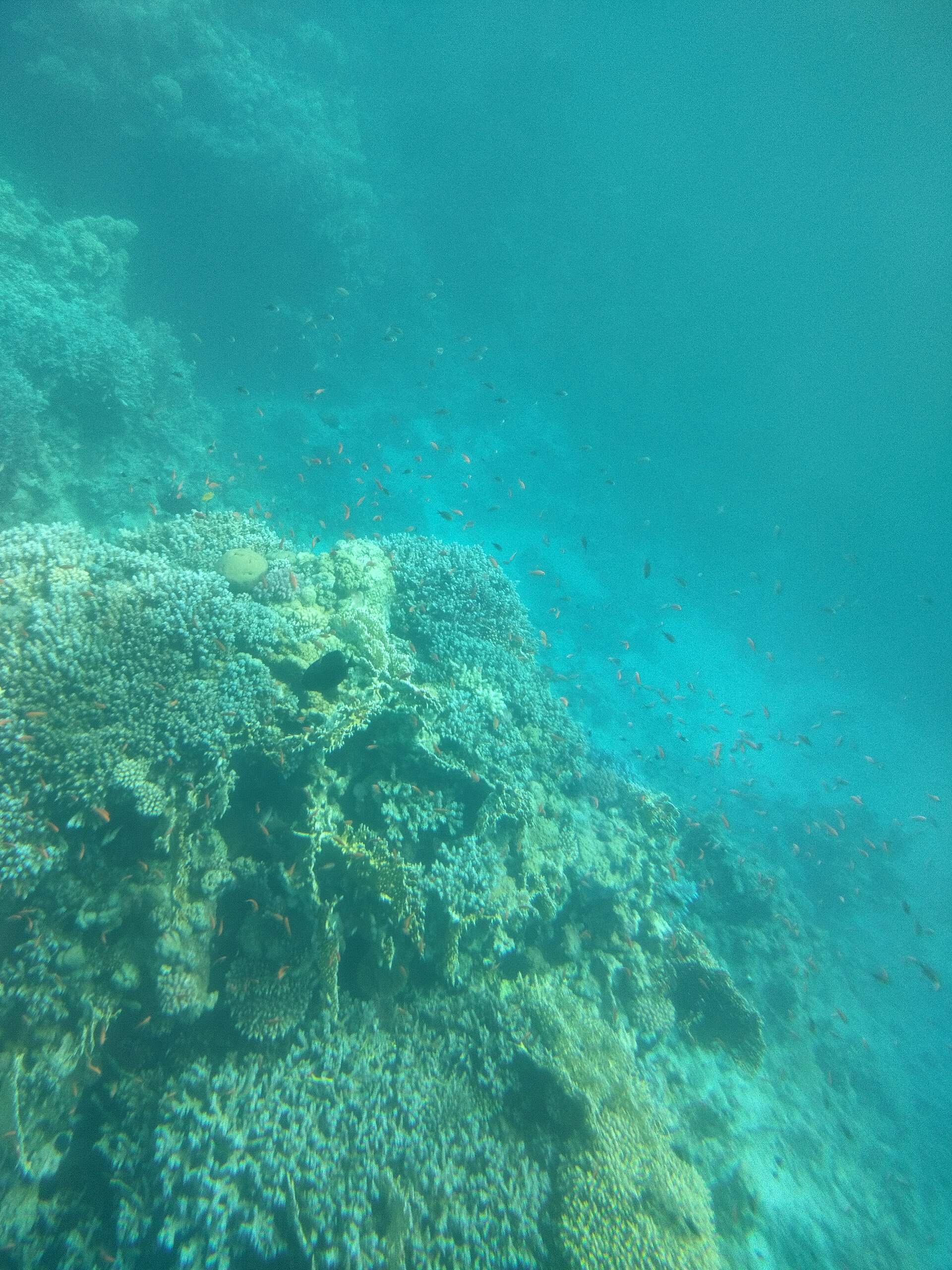
If you wear glasses or contact lenses, one of the first questions you ask before booking a dive is a practical one: will I actually be able to see anything down there? It is one of the most common queries new divers bring to our teams in Dubai and Lusail, and the good news is simple. Yes, you can scuba dive if you wear glasses or contacts. Poor eyesight is almost never a barrier to diving; it just changes how you sort out your vision before you get in the water.
This guide gives you the direct answer on contacts, glasses and prescription masks, then walks through the basic fitness-to-dive health questions every beginner should understand before their first breath underwater.
Can you scuba dive with contact lenses?
Yes, and for most people who already wear contacts it is the easiest solution. But the type of lens matters.
Soft lenses are the safe choice
Soft contact lenses are the recommended option for diving. They are larger, sit more securely on the eye, and are more likely to stay put if your mask floods with water. Divers Alert Network (DAN) recommends soft lenses because they let gas pass through, so they cause no diving-related problems for the vast majority of divers.
Why hard lenses are a problem
Hard lenses, and rigid gas-permeable (RGP) lenses, are a different story. As pressure changes on a dive, tiny gas bubbles can form between a rigid lens and the surface of your eye. DAN notes this can cause blurred vision and eye pain during and after a dive, along with a dry, uncomfortable feeling. If you normally wear rigid lenses, switch to soft ones for diving, or speak to your optician about a soft alternative.
Simple habits that prevent lost lenses
The main risk with any contact lens is losing it if water gets into your mask, which happens routinely during training when you practise mask clearing. Three habits keep you covered:
- Keep your eyes closed during any skill that involves flooding or removing your mask. This is the single most effective way to avoid losing a lens.
- Wear daily disposables if you can. If one is lost or irritated, you simply bin the pair and start fresh, with no infection risk from re-wearing them.
- Tell your instructor you wear contacts before the dive. It takes ten seconds and means they will guide you correctly through mask skills.
Preservative-free rewetting drops on the boat also help if your eyes feel dry between dives.
Can you dive with glasses?
Not directly. A dive mask has to seal flat against your face, and the arms of a pair of glasses break that seal and let water in. So you cannot simply wear your normal glasses under a mask. That does not leave you stuck, though. You have two good routes to clear vision without contacts.
Prescription dive masks
A prescription mask puts your correction into the mask itself, which is ideal if you do not get on with contacts. There are a few options:
- Drop-in or bonded lenses: many quality masks accept corrective lenses that replace or attach to the standard glass, correcting short-sightedness and long-sightedness in common powers.
- Custom-ground lenses: made to your exact prescription, these can handle larger corrections and astigmatism, and give the sharpest result.
- Stick-on magnifying lenses: small adhesive lenses, often used for the bifocal boost older divers need to read a gauge or dive computer.
A prescription mask has one big advantage over contacts: you still see clearly even if the mask floods, because your correction is not going to float away.
You may not need any correction at all
Here is a point that surprises a lot of nervous new divers. Water bends light differently to air, and because of that refraction, objects underwater appear roughly one-third larger and closer than they really are. This natural magnification effect can offset mild short-sightedness. If your prescription is only slightly off, you may find you see perfectly well underwater with no correction whatsoever. It is worth trying a normal mask on your first dive before spending money on a prescription one. Not sure which way to go? Get in touch with our team and we can talk through mask options for your prescription.
Basic fitness-to-dive and health questions
Vision is usually the easy part. The health side is where beginners have the most uncertainty, so here is how it actually works.
The diver medical questionnaire
Before any in-water training, every student completes the Diver Medical Participant Questionnaire, the standard form endorsed by the World Recreational Scuba Training Council (WRSTC) and used by PADI courses worldwide. The current version is short, with 10 yes/no questions covering things like heart and lung conditions, recent surgery, and medication.
The important thing to understand: answering "yes" to a question does not disqualify you from diving. It simply means a doctor should confirm you are fit to dive before you start. If you tick yes to any relevant question, you take the form to a physician, who signs a fitness-to-dive evaluation. That sign-off is generally valid for 12 months, assuming your health does not change.
Common conditions that get flagged
Some of the most common reasons a doctor's sign-off is needed include:
- Asthma or other breathing conditions affecting exercise.
- Heart conditions, including chest pain on exertion, or medication for a heart problem.
- Diabetes controlled by medication or diet.
- Recent surgery, ear or sinus problems, or pregnancy.
None of these is an automatic "no". Many people with well-controlled asthma or diabetes dive safely with medical clearance. The questionnaire exists to catch problems, not to keep people out of the water.
This article is general guidance, not medical advice. For anything specific about your own health or medication, ask your doctor or a dive-medicine physician. They can assess you far better than any online checklist.
What this means for diving in Dubai and Qatar
The warm, calm waters of the Arabian Gulf are a forgiving place to sort out your vision setup. Sea temperatures around Dubai sit near 22°C in winter and climb to 33°C or more in the peak of summer, while Qatar's Gulf waters run from roughly 19°C in January up to about 34°C in August. The clearest water and best visibility usually fall between October and May.
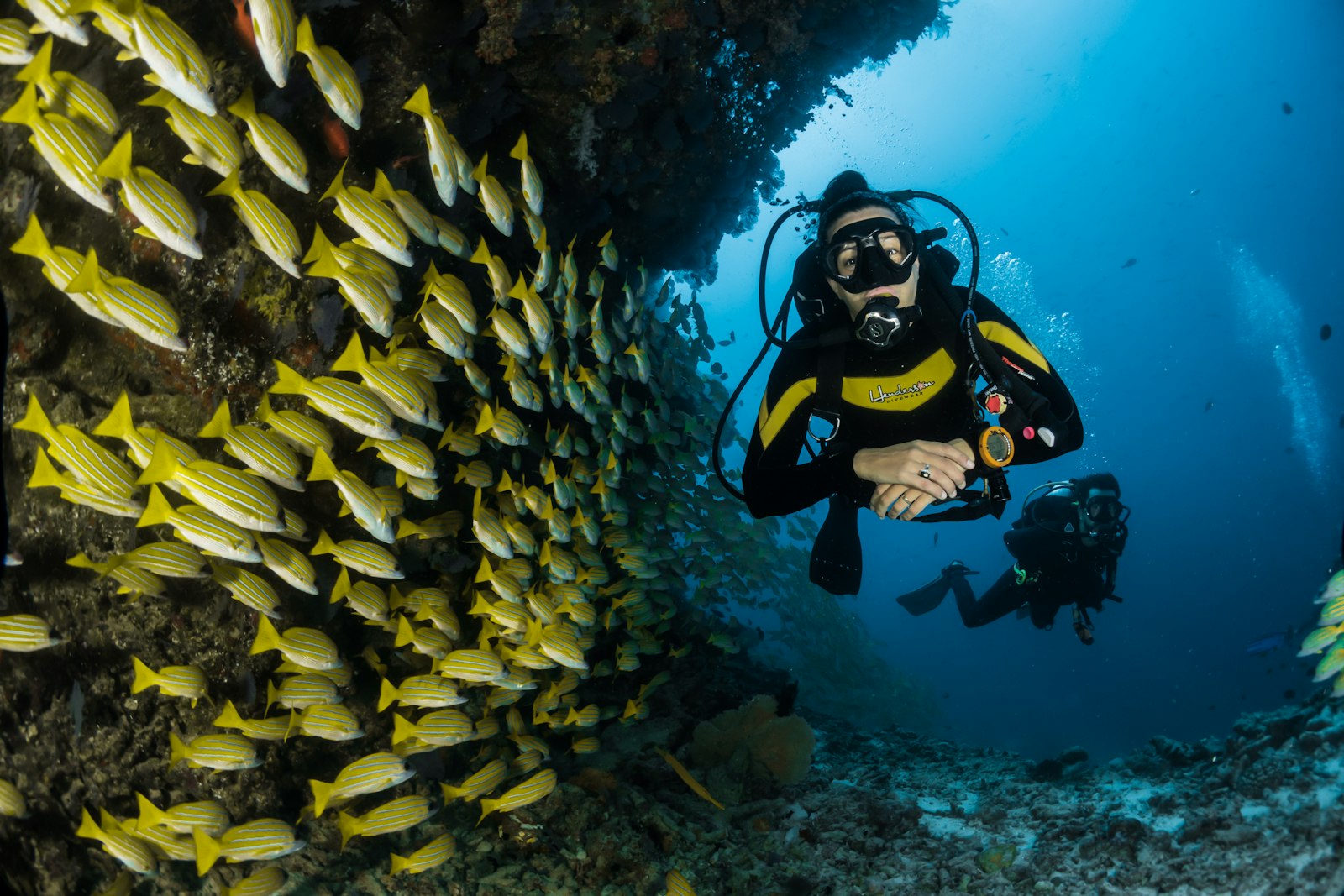
Gulf visibility is typically in the 5 to 10 metre range, so having your vision sorted genuinely improves the experience, whether you are watching a hawksbill turtle graze, spotting a harmless blacktip reef shark, or picking out an Arabian angelfish over the reef. Getting your eyesight right just means you will not miss it.
If you are ready to start, our range of PADI courses from Discover Scuba Diving through to Open Water is a natural first step, and our team in Dubai and Lusail can help you choose the right mask setup for your eyes. Reach out any time with your questions.